Big Tech's AI Data Centres Now Emit as Much Carbon as a Third of France
Microsoft, Amazon and Google collectively pumped out 119 million metric tonnes of carbon dioxide last year. The main culprit: building more data centres to feed AI demand.
Key points
- Microsoft, Amazon and Google combined emitted 119 million metric tonnes of carbon dioxide equivalent in the financial year ending March 2026.
- That total equals roughly one third of France's entire annual national carbon output.
- The three companies' collective emissions rose by nearly one fifth in a single year.
- All three companies still say they intend to reach net zero carbon output, meaning they plan to remove as much carbon as they produce.
Three of the biggest names in technology are producing far more planet-warming carbon than they did a year ago, and the reason is almost entirely AI.
Microsoft, Amazon and Google produced a combined 119 million metric tonnes of carbon dioxide equivalent in the financial year ending March 2026. To put that in plain terms: France, a country of 68 million people with a full industrial economy, emits roughly three times that amount. These three companies alone account for one third of France's total.
That figure is up nearly one fifth on the year before. The jump is steep, and it is driven by one thing: the furious pace of data centre construction.
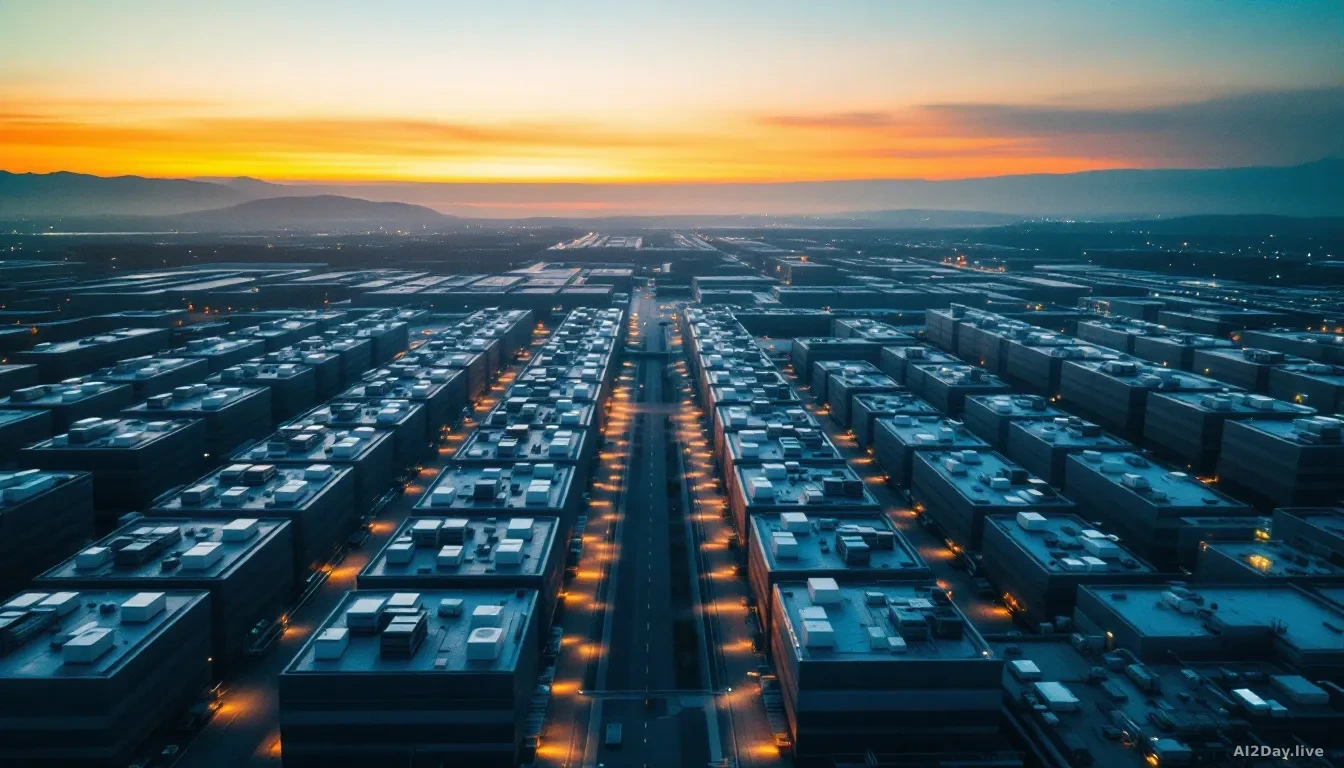
A data centre is a large building packed with computer servers and specialised chips that run AI systems. Training and operating AI models demands enormous amounts of electricity, and generating that electricity produces carbon emissions. The more AI capacity a company builds, the more power it needs, and the more carbon its operations produce.
All three companies told reporters, first covered by The Guardian AI, that they remain committed to net zero goals. Net zero means a company aims to remove from the atmosphere as much carbon as it puts in, through a mix of energy efficiency, renewable power and carbon offset programmes.
But the gap between that ambition and the current numbers is growing wider, not narrower.
For ordinary people, this story connects to something tangible: every AI chatbot query, every AI-generated image, every automated customer service call runs on hardware sitting inside one of these buildings. The AI tools that millions of people use every day have a physical carbon cost, even when those tools feel invisible.
There is no immediate action most individuals need to take. But if you use services from any of these companies, it is worth knowing that their published climate pledges are now under real pressure from their own AI expansion plans.
Will big tech actually hit its net zero targets?
That is genuinely unclear right now. All three companies have set net zero or carbon-neutral targets for various future dates, but each has also seen its emissions rise sharply as AI investment accelerates. Meeting those targets would require either a dramatic shift to renewable energy sources for new data centres, significant improvements in how efficiently chips use power, or both. Independent analysts are watching the gap between the pledges and the annual emissions reports closely.