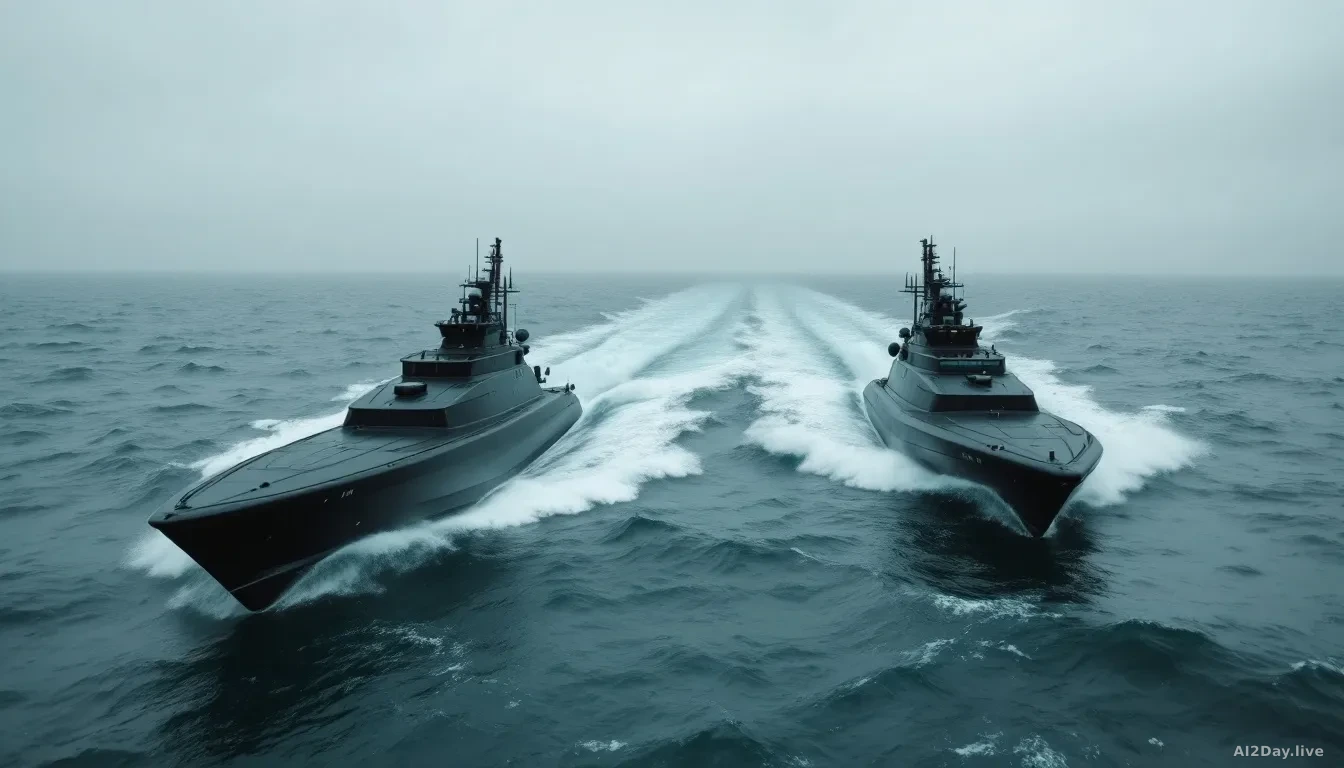
Ondas pays $875.8 million for drone maker DZYNE, betting big on AI-guided military systems
The deal bundles long-range spy drones, drone-killing interceptors, and AI cargo gliders into a single defence platform the company is calling Ondas Sentinel.
Key points
- Ondas Inc. acquired DZYNE Technologies LLC for $875.8 million in a cash-and-stock deal announced last week.
- DZYNE's ULTRA autonomous aircraft has logged tens of thousands of operational flight hours conducting long-range surveillance missions.
- The IonStrike interceptor was built specifically to defeat the Iranian-designed Shahed-136, a one-way attack drone used in active conflicts.
- Ondas is now targeting at least $525 million in total revenue for 2026, with DZYNE alone expected to bring in $191 million that year.
- Ondas has created a new division, Ondas Sentinel, to unify its growing portfolio of AI-guided military systems under one roof.
Ondas Inc., a West Palm Beach company that sells robots, drones, and networking equipment, has acquired DZYNE Technologies LLC, an Irvine, California defence firm, for $875.8 million. The Robot Report first covered the deal. Ondas paid through a mix of cash and stock.
The headline number is big. But what did Ondas actually buy?
The short answer: a collection of AI-guided flying machines built for the modern battlefield, where cheap attack drones have become one of the most pressing threats facing soldiers.
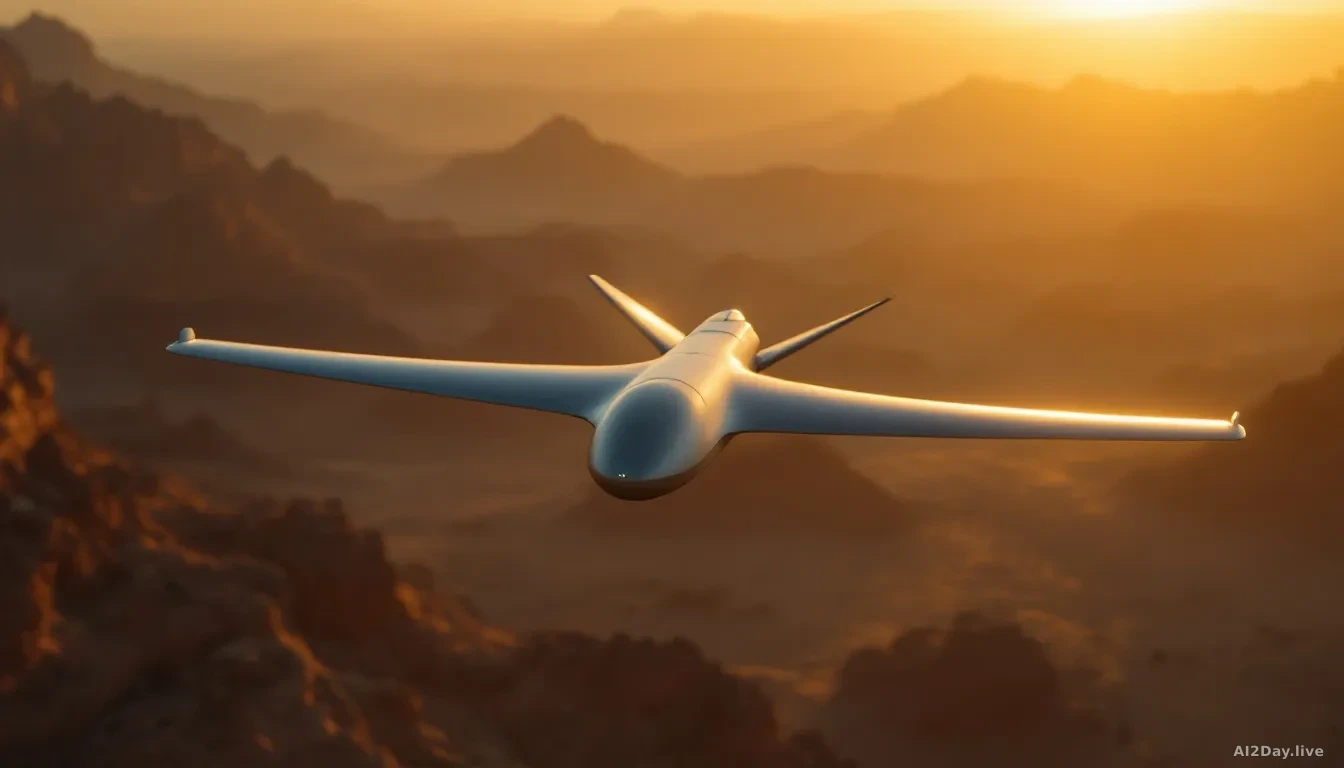
DZYNE's flagship product is ULTRA, a long-endurance autonomous aircraft, meaning a drone that can fly itself for multiple days while streaming surveillance video over large areas. It has already clocked tens of thousands of flight hours in real operations.
Then there is IonStrike, an autonomous interceptor designed to spot, track, and physically ram hostile drones out of the sky. Engineers built it specifically to counter the Shahed-136, an Iranian-designed one-way attack drone, essentially a flying bomb, that has appeared in conflicts from Ukraine to the Middle East. IonStrike works alongside Dronebuster, a hand-held jammer that disrupts a drone's control signals at close range.
For logistics, DZYNE built Grasshopper, an autonomous cargo glider that can drop up to 500 pounds of supplies into areas where it would be too dangerous for a helicopter to land.
Rounding out the set is Blitz, a small autonomous drone with a 93-mile range that can operate in coordinated swarms, groups of drones acting together without a human guiding each one individually.
Ondas is folding all of this into a new division called Ondas Sentinel, which will combine surveillance, drone defence, cargo delivery, and AI mission software under a single operating structure. Ryan Hartman, previously CEO of stratospheric balloon company World View, will lead Sentinel. DZYNE co-founder Matt McCue moves into the chief technology officer role.
"The character of warfare is changing rapidly," said Eric Brock, chairman and CEO of Ondas, "and military advantage increasingly belongs to organizations capable of deploying autonomous systems at scale."
The financial targets Ondas has set are ambitious. The company expects DZYNE to generate $191 million in revenue in 2026 and more than $300 million in 2027.
What does this mean for people outside the defence industry?
Directly, very little today. But the AI navigation, autonomous decision-making, and computer-vision tracking being refined in military drones tend to migrate into civilian products over time, from delivery drones to emergency-response aircraft. The pace of that migration is worth watching.
For now, the clearest signal here is commercial: defence contractors are paying serious money for AI systems that can act without waiting for a human to press a button.