Sunrun wants to turn your living room into a tiny AI data centre
The solar company is paying homeowners to host small computing units that sell AI processing power to big tech firms. Here is what that actually means for you.
Key points
- Sunrun, a home solar and battery storage company, announced a distributed AI compute pilot programme in July 2026.
- The programme places small compute nodes, mini computers that process AI tasks, inside customers' homes that already have Sunrun solar panels and batteries.
- Sunrun has 1.1 million existing customers who can join the pilot waitlist.
- A survey released in May 2026 found that more than 70 percent of Americans oppose new data centres being built near them.
- Sunrun plans to sell the computing power to enterprise buyers, such as AI companies, and compensate participating homeowners.
Big AI needs a lot of computing power. Right now, that power mostly lives in enormous data centres, huge warehouse-sized buildings packed with specialised computers. Those buildings are getting harder to build because communities object to the noise, pollution, and enormous water and electricity use they bring.
Sunrun, a company best known for fitting solar panels and home batteries, thinks it has a different answer. Instead of one giant building, spread thousands of small compute nodes, each one a compact computer unit, across ordinary homes all over the country. Call it a distributed AI compute network.
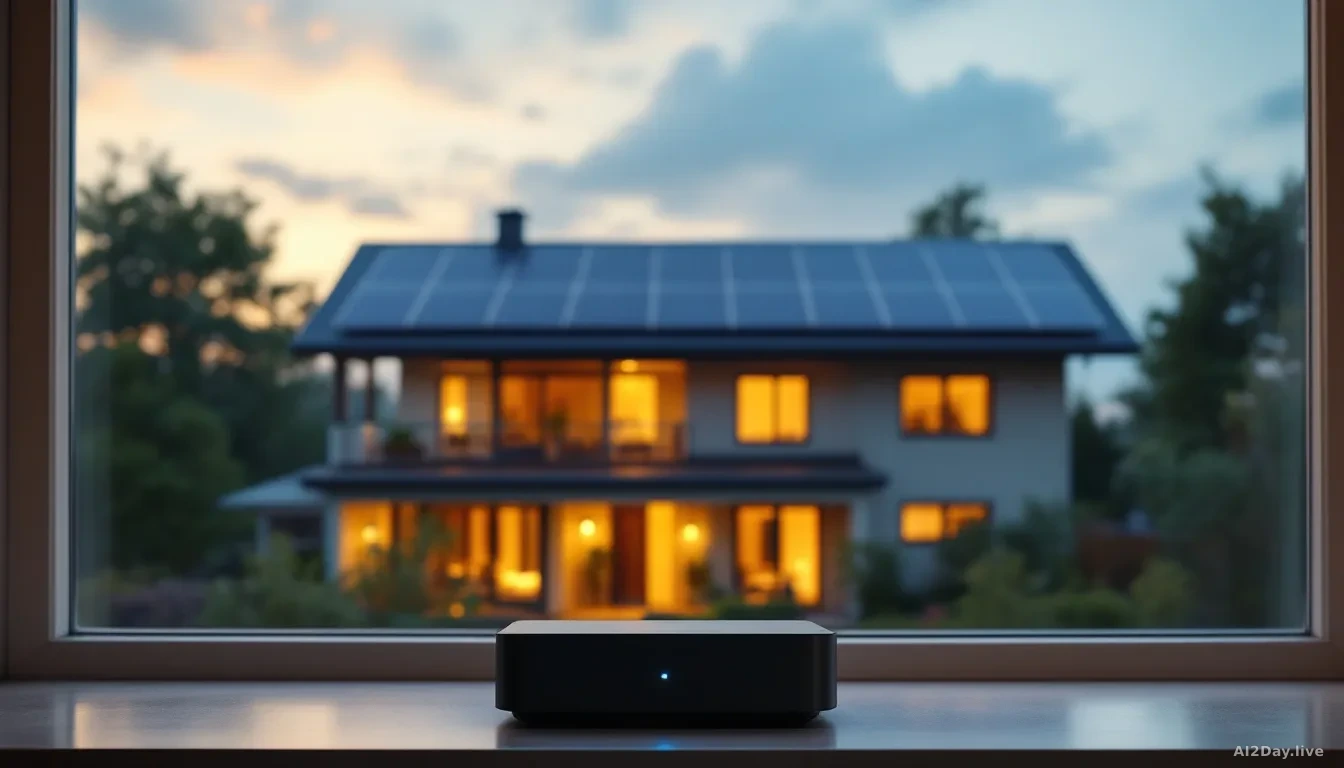
Here is the basic deal. You already have Sunrun solar panels and a home battery. Sunrun installs a compute node in your home. Your solar setup powers it. Sunrun sells the processing capacity to AI companies that need it. You get paid something for the trouble.
Think of it like renting out a spare room, except the room is a small box plugged into your electricity system and the tenant is a corporate AI workload.
Sunrun says it ran a successful proof of concept before announcing the pilot, first reported by The Verge. The company expects to wrap up the pilot over the coming months before deciding whether to roll it out more widely to its full 1.1 million customer base.
Should you sign up?
Honestly, it depends on the details Sunrun has not yet shared. The company says participants will be "compensated" but has not published a figure, so it is impossible to say whether the money is worth it at this stage.
There are a few things worth knowing before you join the waitlist. First, a compute node processing corporate AI tasks in your home will use electricity, even if your solar panels offset some of that. Second, any device connected to the internet is a potential security surface, a point where hackers could try to get in, so you would want to know exactly what security protections cover the node. Third, the data passing through your home is commercial AI compute traffic, and it is worth asking Sunrun what, if anything, that means for your home network.
None of this is a reason to panic. It is just sensible to wait for the full programme terms before signing up.
If Sunrun pulls this off at scale, it could genuinely change how AI infrastructure gets built. Spread across a million homes, the combined computing power could be substantial, and each home's solar panels make the energy story cleaner than a grid-hungry data centre.